

Inspirational Leadership
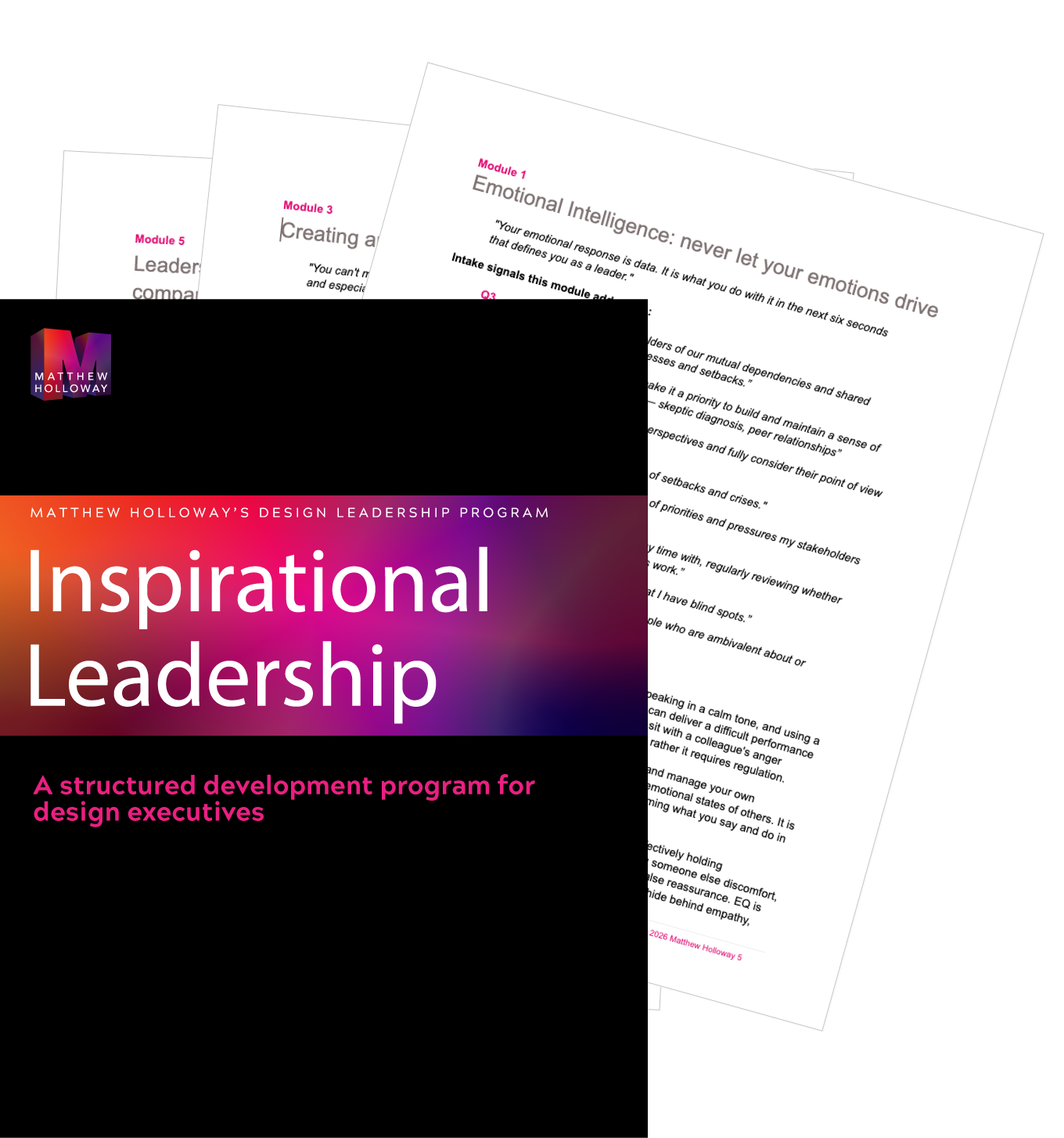
Inspirational Leadership is a six-module coaching program built from the ground up for design executives — not adapted from a general framework, but developed specifically for the organizational, interpersonal, and strategic challenges design leaders face. Each module builds the foundation the next one requires, covering emotional intelligence, transparency, feedback culture, risk and accountability, strategic purpose, and team development. The reflections ask honest questions. The exercises require real conditions. The challenges are the ones most leaders have been deferring..
Exercises are behavioral. They are specific things to do in your actual work, with your actual team, in real situations. Most of them are designed to be uncomfortable the first time. That discomfort is the signal that something real is being asked of you.
Challenges are the hardest category. They identify the conversation you have been deferring, the risk you have been avoiding, the relationship you have been managing around rather than addressing. The challenges are where most of the development actually happens.
This program will show you things about your leadership that are uncomfortable to see. That is not a warning. That is the point.
This is a coaching program, not a reading list.
Emotional regulation comes first because everything else depends on it. A leader who is emotionally reactive cannot communicate clearly under pressure, cannot hold steady when feedback is uncomfortable, cannot make honest calls about performance, and cannot develop others while also holding them accountable. EQ is not one skill among six. It is the foundation the other five are built on.
Clarity and transparency come second because once you can regulate your own reactions, you can start being honest — with your team, with your peers, with yourself. Transparency is not a communication technique. It is what becomes possible when you are no longer protecting yourself through opacity.
Feedback culture comes third because an environment where honest feedback flows requires both a regulated leader and a transparent one. You cannot ask your team to speak difficult truths if you are visibly reactive to them or if your own communication is selective and guarded.
Risk, failure, and accountability comes fourth because distinguishing genuine learning from pattern underperformance requires emotional steadiness, honest communication, and a team culture where reality is named rather than managed. If the first three aren't in place, leaders either avoid accountability entirely or apply it inconsistently and reactively.
Purpose and strategic alignment comes fifth because direction-setting under uncertainty — the hardest version of this work — requires a leader who is regulated, honest, has established trust through feedback, and can hold people accountable. Without those foundations, purpose statements are just language. With them, they become the actual filter for decision-making.
Developing your team comes last because it is the synthesis. Developing others to lead requires everything that comes before: the emotional intelligence to coach without ego, the transparency to name gaps honestly, the feedback culture to make development real rather than performative, the accountability to hold standards while supporting growth, and the strategic clarity to develop people for something, not just generally.